For two decades the internet's identity layer was a federation of platform accounts: log in with Google, log in with Facebook, log in with whoever owns the most reliable login button. Web3 introduced an alternative — not based on tokens or speculation, but on cryptographic proofs the user holds in their own wallet. In 2026 the decentralised identity stack has matured into something enterprise teams can actually deploy.
The three pillars of self-sovereign identity
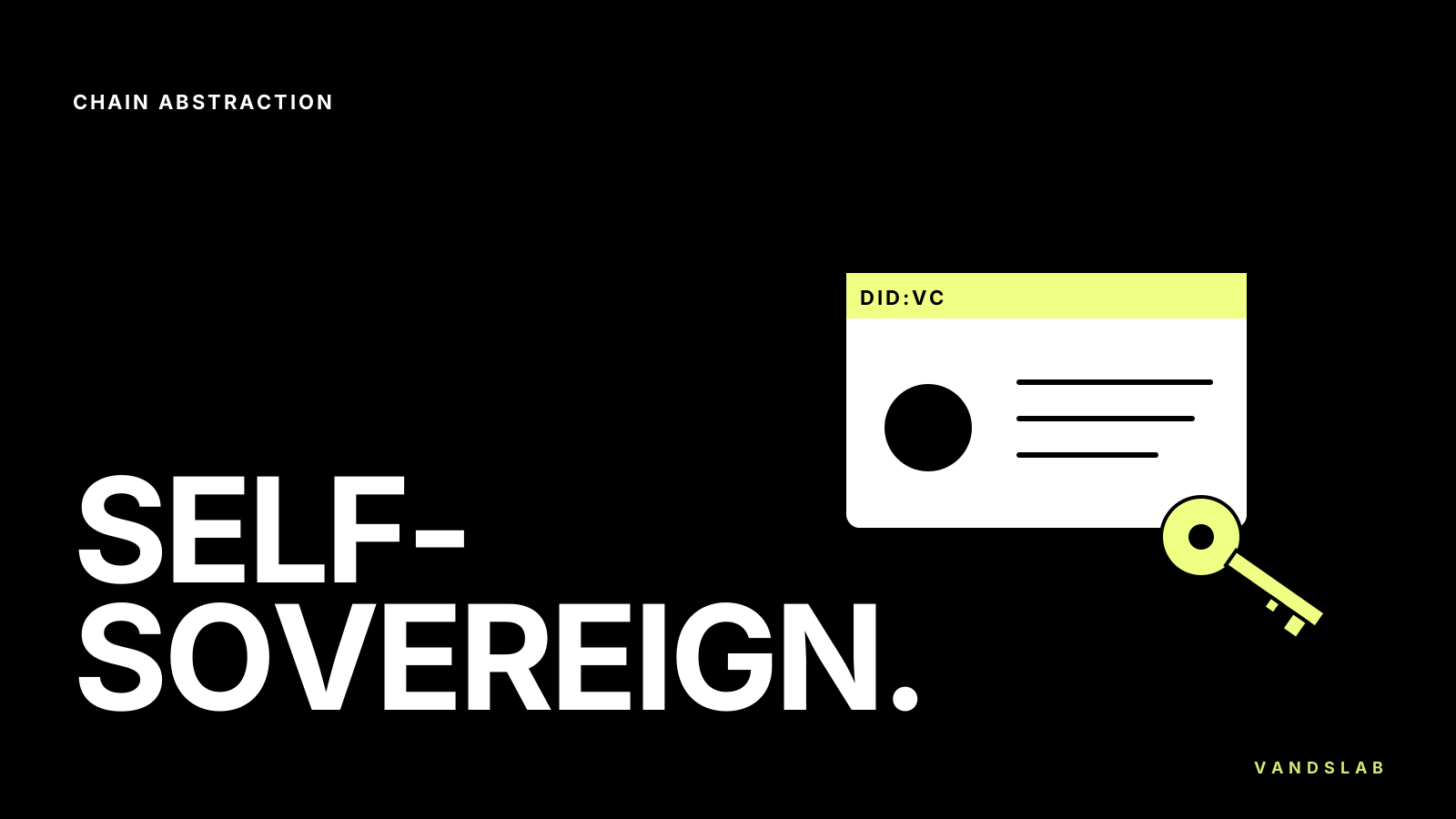
- Decentralised Identifiers (DIDs) — globally unique identifiers the user controls, anchored on a verifiable data registry.
- Verifiable Credentials (VCs) — cryptographically signed claims an issuer makes about a subject (e.g. 'this person is over 18').
- Wallets — user-held software that stores DIDs and VCs and presents them selectively to verifiers.
Why this matters beyond crypto
The compelling enterprise use case is not 'put identity on a blockchain' — it is selective disclosure. With verifiable credentials, a user can prove a property (age, employer, qualification) without revealing the underlying document. That is a different shape of privacy than anything OAuth federations can offer.
Where it is landing in 2026
- EU Digital Identity Wallet — every member state on a path to issue VC-based credentials.
- Workforce credentials — onboarding flows verifying education and prior employment without paperwork.
- KYC / AML — reusable identity proofs reduce friction without weakening compliance.
- Customer login — passwordless, cross-platform, user-portable accounts.
Exploring decentralised identity for an enterprise login or KYC flow? Reach out via the contact section.
Frequently asked questions
- Most do not — and they should not have to manage them raw. Modern wallets abstract key management with social recovery, passkeys, and custodial fallbacks. The user-facing experience can be as easy as Apple Pay.
- Yes — and arguably more aligned with GDPR principles than centralised alternatives, because data minimisation and purpose limitation are baked into the protocol shape.
- Verifiable credentials provide a clean substrate for proving compliance posture (model card hashes, training-data certifications) without exposing the underlying artefacts. Expect convergence over the next 24 months.