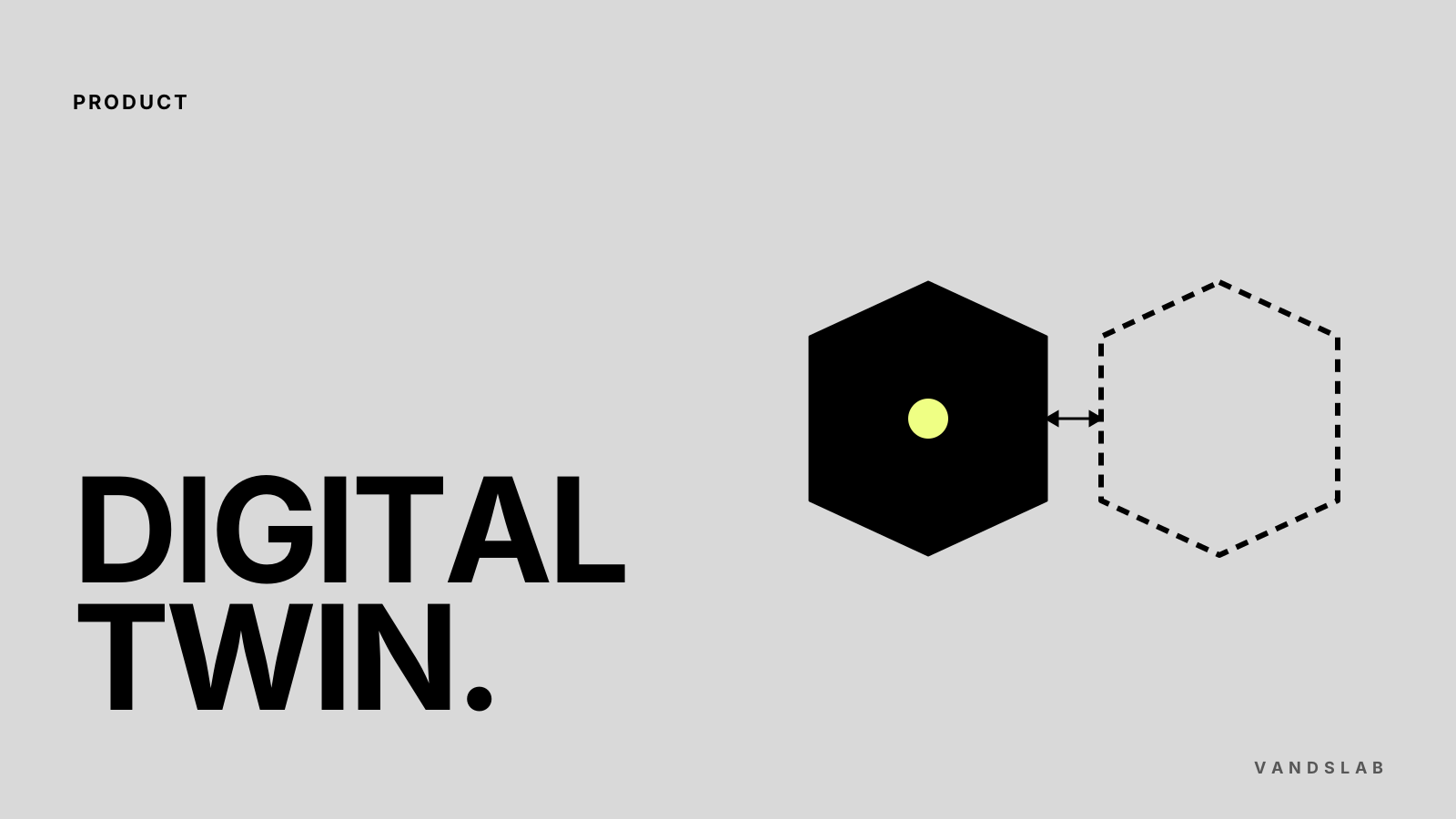
The concept of a digital twin was forged in heavy industry — a high-fidelity simulation of a turbine or assembly line, fed by sensor data, used to predict failures and optimise maintenance. The same idea is now eating software. SaaS companies are building digital twins of their infrastructure, their customer journeys, and their pricing models, and using them to test interventions before they hit real users.
Three places digital twins pay off in software
- Infrastructure twins — replay traffic, inject failures, measure blast radius before chaos engineering touches prod.
- Customer journey twins — agent-based models of cohorts, used to forecast churn, conversion, and onboarding friction under proposed UX changes.
- Pricing and packaging twins — simulate price changes against historic behaviour to predict revenue elasticity by segment.
What separates a twin from a dashboard
Dashboards describe what happened. Twins answer what would happen. The dividing line is the simulation engine: a digital twin is bidirectional — live data shapes the model, but the model can also project forward under counterfactual conditions. Without that forward-projection capability you have very expensive analytics.
Build vs buy in 2026
Off-the-shelf twin platforms have matured for industrial use cases. For software twins the tooling is fragmenting: modelling frameworks, replay engines, agent-based simulators, and LLM-driven persona generators each cover a slice. Most teams in this space are assembling — not buying — and the integration is the work.
Considering a digital twin for your SaaS infrastructure or customer journey? Reach out via the contact section.
Frequently asked questions
- No. A staging environment runs the same code with synthetic traffic. A digital twin is a model of system behaviour that can run faster than real time and explore counterfactuals — including conditions you can't safely reproduce in staging.
- Accurate enough to make the next decision better than guessing. Over-fitting a twin to perfect fidelity is a common failure mode — fidelity has compounding cost, decisions only need directional confidence.
- Yes. LLM-powered persona twins simulate customer cohorts with much richer behaviour than traditional Monte-Carlo agents — useful for UX research, onboarding flows, and pricing tests where the input is qualitative.